Updated May 27, 2026 — EPA Rule Change Alert
On May 18, 2026, the EPA formally proposed extending the PFOA/PFOS compliance deadline for public water systems from April 2029 to April 2031, and rescinding federal limits for four additional PFAS compounds (PFHxS, PFNA, HFPO-DA/GenX, and the Hazard Index mixture). Public comment closes July 20, 2026. For homeowners, the takeaway is unchanged: the chemicals haven’t gotten safer, only the regulation has been scaled back. Filtering at the tap remains the fastest way to address PFAS in your water.
PFAS (per- and polyfluoroalkyl substances) are a group of thousands of synthetic chemicals that have been used in manufacturing, firefighting foam, cookware coatings, food packaging, and countless consumer products since the 1940s. They’re called “forever chemicals” for good reason: they don’t break down in the environment or in the human body, and they’ve been detected in water systems serving tens of millions of Americans.
In April 2024, the EPA finalized the first legally enforceable drinking water standards for PFAS in U.S. history, setting maximum contaminant levels (MCLs) of 4 parts per trillion (ppt) for PFOA and PFOS. The 2024 rule also set limits for four additional compounds: PFHxS, PFNA, HFPO-DA (commonly known as GenX), and a Hazard Index mixture covering combinations of those three plus PFBS.
The regulatory picture has shifted significantly since then. On May 18, 2026, the EPA published two proposed rules that materially scale back the 2024 framework. The first proposes extending the PFOA/PFOS compliance deadline from April 26, 2029 to April 26, 2031 for public water systems that request it. The second proposes rescinding the federal limits for PFHxS, PFNA, HFPO-DA, and the Hazard Index mixture, on the grounds that the original rulemaking did not follow Safe Drinking Water Act procedural requirements. Public comments are open until July 20, 2026, with a virtual public hearing on July 7. A final rule is expected later in 2026.
What this means in practice for homeowners: the most-studied compounds (PFOA and PFOS) remain federally regulated at 4 ppt, but utilities now have until 2031 to meet those limits. The four other PFAS compounds are likely to lose federal protection at the tap, though some states including North Carolina maintain their own GenX standards.
The practical implication hasn’t changed. If PFAS is in your water, the fastest solution isn’t waiting for your utility to comply, and it isn’t waiting for federal rulemaking to settle. It’s filtering at the tap.
The challenge is that most filters don’t actually remove PFAS. Here’s how to tell which ones do.
Quick Picks: Best Water Filters for PFAS Removal
Here’s a summary of our top picks across every filter type. Full reviews follow below.
| Pick | Filter Type | PFAS Certification | Price Range |
|---|---|---|---|
| Waterdrop G3P800 | Under-sink RO | NSF/ANSI 58 (PFOA/PFOS) | $350 to $450 |
| AquaTru Carafe | Countertop RO | NSF/ANSI 53 (PFOA/PFOS) | $350 to $400 |
| Clearly Filtered Pitcher | Pitcher | NSF/ANSI 42, 53, 473 | $85 to $100 |
| Culligan ZeroWater Pitcher | Pitcher | NSF/ANSI 42, 53, 473 | $40 to $60 |
| Aquasana AQ-5300+ | Under-sink (non-RO) | NSF/ANSI 473 | $150 to $200 |
| iSpring RCC7AK | Under-sink RO | RO membrane (99%+ removal) | $200 to $250 |
| Epic Nano Pitcher | Pitcher | NSF P473 | $45 to $60 |
The Only Thing That Matters: Verified PFAS Certification
Before getting into specific product picks, this point deserves emphasis: a filter that claims to remove PFAS without independent certification to back it up is a marketing claim, not a safety guarantee.
There are three NSF/ANSI standards relevant to PFAS removal, and knowing the difference matters more than most buyers realize, especially now that federal protection on four PFAS compounds is being rolled back.
NSF/ANSI 53 (with PFOA/PFOS claims): Originally a standard for health-related contaminants like lead, NSF 53 now includes testing protocols for PFOA and PFOS reduction in carbon-based filters. A filter certified to NSF 53 for PFOA/PFOS has been independently verified to reduce these two specific compounds.
NSF/ANSI 58 (with PFOA/PFOS claims): The reverse osmosis standard. RO systems certified to NSF 58 with PFOA/PFOS claims have been verified to reduce these compounds via membrane filtration.
NSF/ANSI P473 (now incorporated into NSF 53/58): Originally a standalone certification for PFOA/PFOS reduction, P473 has been incorporated into the NSF 53 and 58 standards. Some manufacturers still reference “P473” on packaging, which is equivalent to the PFOA/PFOS reduction certification within NSF 53 or 58.
NSF/ANSI 401: Covers “emerging contaminants” including some pharmaceuticals and industrial chemicals. This is NOT a PFAS standard. A filter certified only to NSF 401 has not been verified for PFAS reduction, despite what some product listings imply.
One more distinction worth knowing, and it now matters more than ever: some filters are certified for reduction of individual PFAS compounds (typically PFOA and PFOS), while others are certified for “Total PFAS,” a broader panel that may include PFNA, PFHxS, HFPO-DA, and others. With the EPA proposing to rescind federal limits for PFHxS, PFNA, and GenX, utilities will not be required to monitor or treat for these compounds even when present. If your water test has detected PFAS beyond PFOA and PFOS, look specifically for Total PFAS certification or independently verified lab data covering the specific compounds in your water. The federal safety net for these compounds is being removed; certified filtration is increasingly the only reliable backstop.
How Well Do Different Filter Types Remove PFAS?
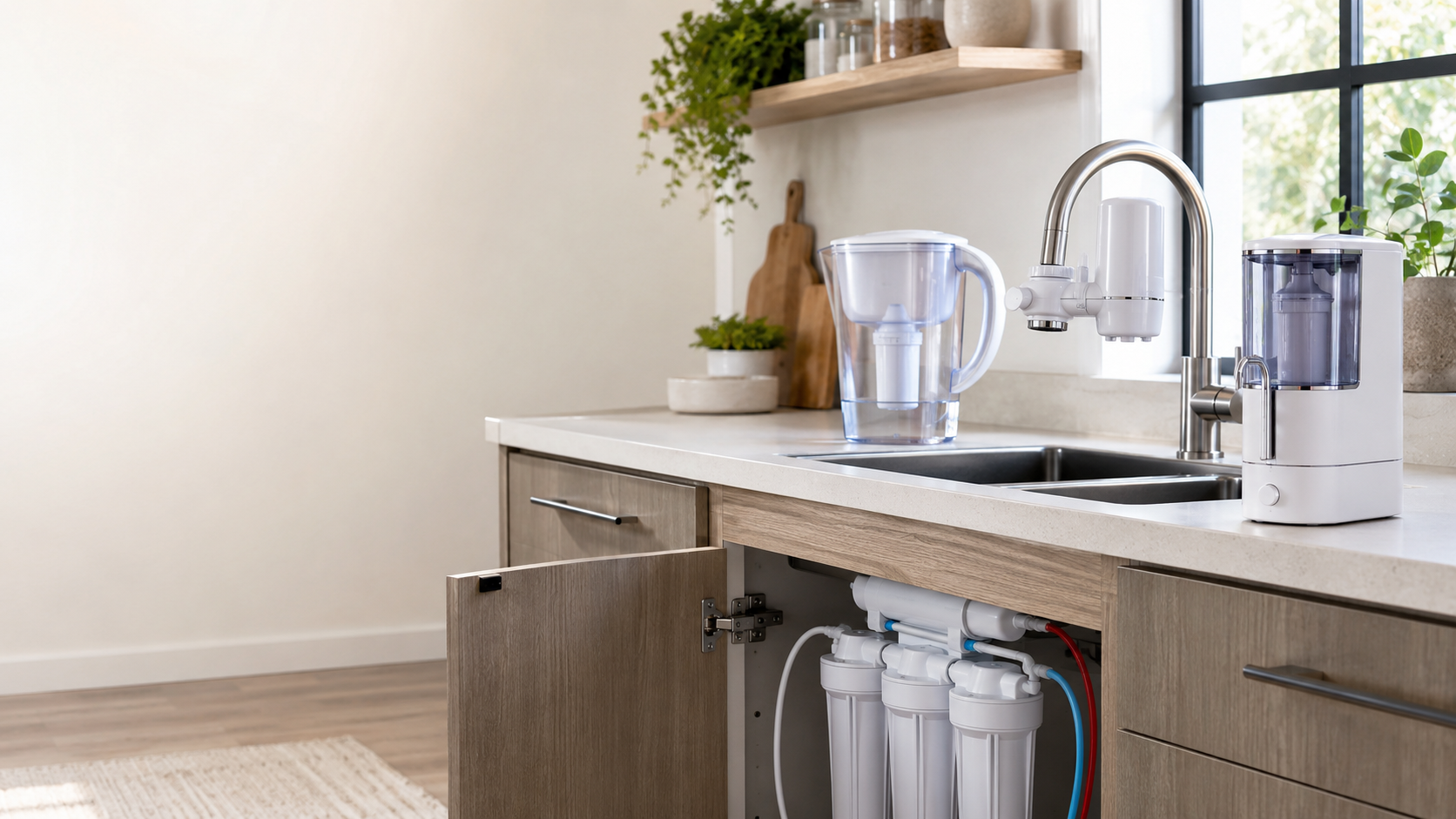
Not all filtration technologies are equally effective against PFAS, and some popular filter types offer little to no protection. Here’s an honest breakdown before we get into specific product recommendations.
Reverse Osmosis (Most Effective)
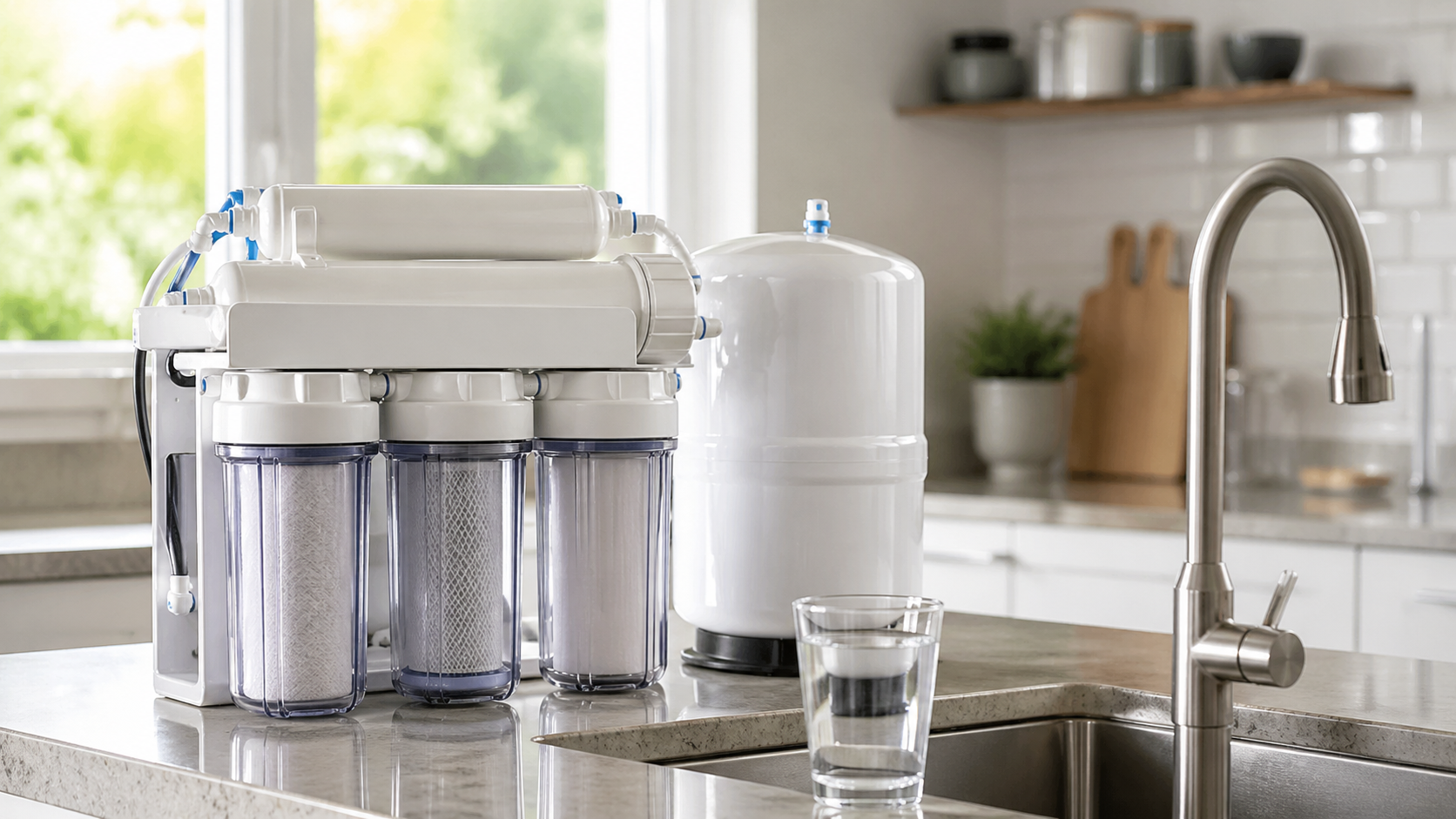
RO systems consistently achieve the highest PFAS removal across the widest range of compounds. The semi-permeable RO membrane physically blocks PFAS molecules, which are too large to pass through. In independent lab testing including full 14-analyte PFAS panels, quality RO systems regularly return results of “not detected” across all compounds tested. This is the gold standard for PFAS removal, and given the rollback of federal limits on four compounds, it’s also the most future-proof choice for households concerned about the broader PFAS family rather than just PFOA and PFOS.
Certified Carbon Block Filters (Effective for PFOA/PFOS)
High-quality carbon block filters with NSF 53 or P473 certification reliably reduce PFOA and PFOS, the two PFAS compounds with the most health data and the only ones currently under enforceable EPA standards. Performance on shorter-chain PFAS compounds like PFBS and PFBA is less consistent. Contact time and media volume matter significantly: a small pitcher filter cartridge provides far less contact time than a large under-sink carbon block, which directly affects removal rates.
Granular Activated Carbon (Inconsistent)
Loose granular activated carbon (GAC) provides inconsistent PFAS reduction. Independent research has found GAC filter performance ranging from 0% to 73% PFAS reduction depending on the system and maintenance status. Filters past their service life actually worsened PFAS levels in some cases, releasing previously captured compounds back into the water. GAC without specific PFAS certification should not be relied on for PFAS removal.
Standard Pitcher Filters (Not Reliable)
Basic pitcher filters including standard Brita and PUR models were not designed for PFAS removal and do not carry PFAS certification. Some may provide incidental reduction of PFOA/PFOS, but the media volume is too small and contact time too short for consistent, verified performance. Do not rely on a basic pitcher if PFAS is your primary concern.
Gravity Filters (Unverified)
Gravity-fed systems like Berkey have marketed themselves for PFAS removal, but they do not carry NSF/ANSI certification for PFAS. Without independent third-party verification, performance claims cannot be confirmed. The EPA and NSF both recommend certified systems for PFAS removal.
Whole-House Carbon Filters (Insufficient Alone)
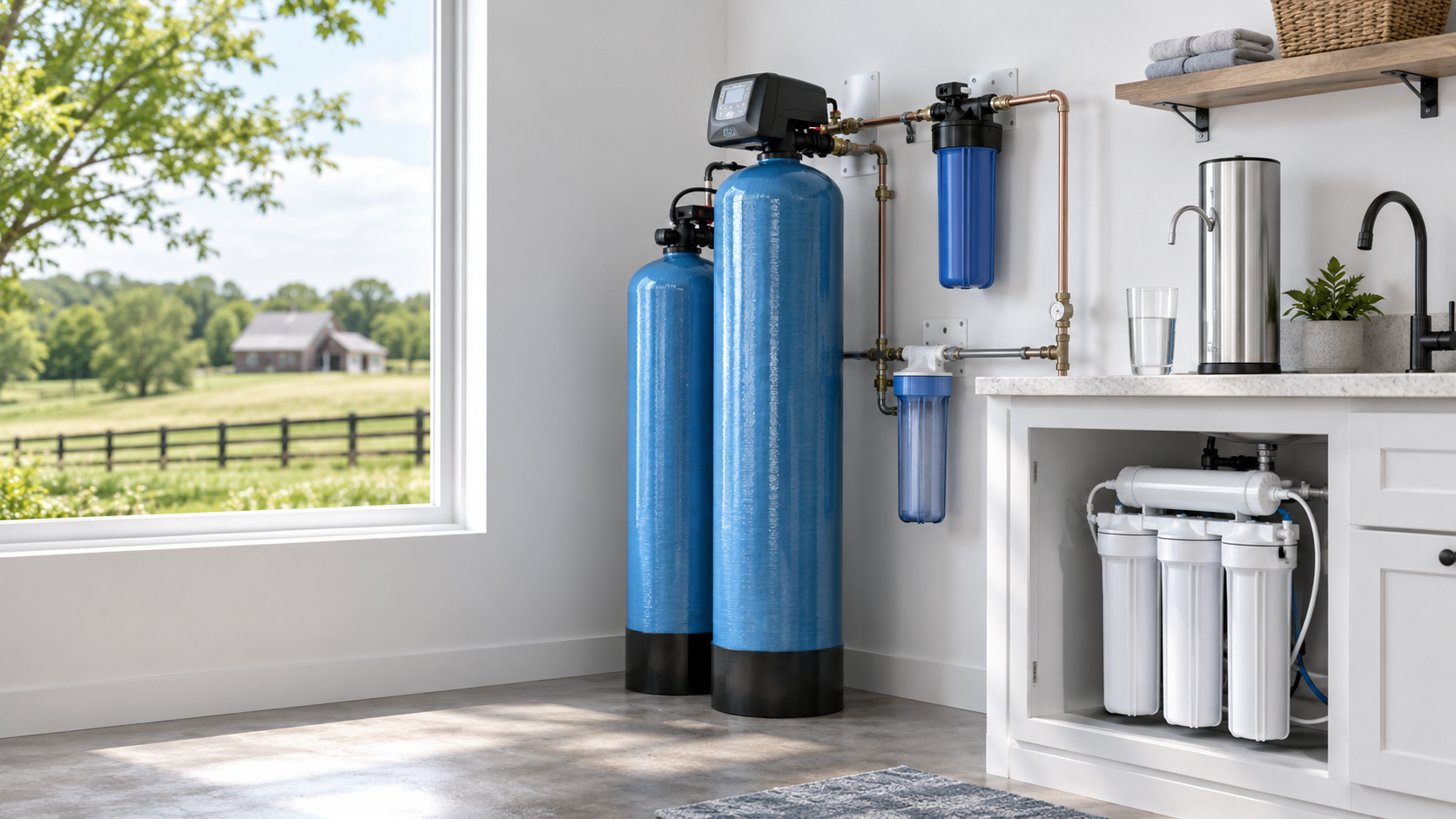
Whole-house carbon filtration is excellent for chlorine, sediment, and general water quality, but typically lacks the contact time and membrane technology needed to reliably handle PFAS at parts-per-trillion levels. For whole-home PFAS protection, a point-of-use system at the kitchen sink remains the stronger primary solution.
The 7 Best Water Filters for PFAS Removal
Every filter on this list carries independent third-party certification for PFAS reduction. No uncertified filters are included, regardless of manufacturer claims.
1. Waterdrop G3P800 — Best Overall
Filter type: Tankless under-sink reverse osmosis
The Waterdrop G3P800 is the top-performing PFAS filter we recommend for most households. It’s NSF/ANSI 58 certified for PFOA/PFOS reduction, and in independent Tap Score lab testing covering a full 14-analyte PFAS panel, all 14 compounds came back not detected. That’s the most comprehensive independent PFAS verification available on any residential filter, and it covers the compounds the EPA is proposing to deregulate as well as the ones that remain under federal limits.
Beyond PFAS, it removes lead, arsenic, fluoride, nitrates, chromium, and 1,000+ other contaminants, making it a comprehensive drinking water solution rather than just a PFAS-specific one. The tankless design provides on-demand filtered water at 800 gallons per day, a built-in UV sterilizer adds bacteria protection, and a smart TDS faucet monitors filter performance in real time. At $350 to $450 upfront with roughly $120 to $150 in annual filter costs, it’s the most complete solution at a mid-range price.
- Certifications: NSF/ANSI 42, 53, 58 (PFOA/PFOS)
- PFAS lab result: 14/14 analytes not detected (Tap Score independent testing)
- Also removes: Lead, fluoride, arsenic, nitrates, chromium, microplastics, chlorine
- Annual filter cost: ~$120 to $150
- Best for: Homeowners who want the strongest available PFAS protection with comprehensive contaminant removal
2. AquaTru Carafe — Best for Renters
Filter type: Countertop reverse osmosis (no installation required)
The AquaTru Carafe is the best PFAS filter for anyone who can’t or doesn’t want to modify their plumbing. It plugs into a standard outlet, requires no installation, and delivers RO-level PFAS removal. It’s certified to NSF/ANSI 53 for PFOA/PFOS, with independent lab testing showing 100% elimination of lead, fluoride, and uranium alongside PFAS in controlled testing.
For apartment dwellers, renters, or anyone who wants countertop convenience without sacrificing filtration quality, it’s the strongest available option. The 64-ounce carafe capacity covers daily drinking needs for most households, and filter replacement costs run approximately $75 per year.
- Certifications: NSF/ANSI 42, 53, 58, 473
- Also removes: Lead, fluoride, arsenic, uranium, nitrates, chlorine
- Annual filter cost: ~$75
- Best for: Renters and apartment dwellers who want RO-level PFAS removal without installation
3. Clearly Filtered Pitcher — Best Pitcher for PFAS
Filter type: Pitcher
If you want PFAS protection in a pitcher format, the Clearly Filtered is the strongest option available. It’s certified to NSF/ANSI 42, 53, and 473, with third-party lab results publicly available on the manufacturer’s website showing 99.8% PFOA removal and 99.5%+ reduction across PFAS compounds. It also targets 200+ additional contaminants including lead, fluoride, chloroform, and heavy metals, which is a much broader profile than standard pitchers.
Filter life is 100 gallons (roughly 2 to 3 months for average use) and annual costs run around $170. That’s higher than a Brita, but justified given the filtration scope. The pitcher carries a lifetime warranty, which is unusual in this category. The main trade-off is fill speed: expect 15 to 20 minutes per fill versus 5 to 10 for a basic pitcher, and larger households will need to refill several times daily.
- Certifications: NSF/ANSI 42, 53, 401, 473
- PFAS removal: 99.8% PFOA, 99.5%+ PFAS (third-party lab verified)
- Also removes: Lead, fluoride, chloroform, 200+ contaminants
- Annual filter cost: ~$170
- Best for: Renters and small households who want the best available PFAS protection in a no-installation format
4. Culligan ZeroWater Pitcher — Best Value Pitcher for PFAS
Filter type: Pitcher (5-stage ion exchange + carbon)
The Culligan ZeroWater pitcher uses a five-stage ion exchange process that goes significantly further than standard carbon-only pitchers. In independent testing, it completely eliminated fluoride, uranium, sulfate, nitrates, and PFAS compounds, earning contaminant reduction scores comparable to RO systems. It’s certified to NSF/ANSI 42, 53, and 401 for all claimed reductions, including PFAS.
At $40 to $60, it’s the most affordable NSF PFAS-certified pitcher available. The trade-off is filter life: ZeroWater filters exhaust faster in hard water or high-TDS supplies, which can push annual costs to $100 to $150 depending on your water quality.
- Certifications: NSF/ANSI 42, 53, 401 (including PFAS)
- Also removes: Fluoride, uranium, nitrates, sulfate, heavy metals, TDS
- Annual filter cost: ~$90 to $150 (varies by water hardness)
- Best for: Budget-conscious buyers who want verified PFAS removal in a pitcher
5. Aquasana AQ-5300+ — Best Non-RO Under-Sink Filter for PFAS
Filter type: 3-stage under-sink carbon block (no reverse osmosis)
The Aquasana AQ-5300+ is the best choice for households that want comprehensive under-sink PFAS removal without reverse osmosis, preserving beneficial minerals, avoiding wastewater production, and skipping the storage tank. It’s NSF/ANSI 473 certified and removes PFAS alongside lead, chlorine, chloramines, and VOCs. The Max Flow version provides improved water pressure over earlier models.
At $150 to $200 for the system with replacement filter costs around $60 to $80 per year, it’s one of the most affordable NSF-certified under-sink options available. Installation requires basic plumbing work, but most DIYers complete it in under an hour.
- Certifications: NSF/ANSI 473, 42, 53
- Also removes: Lead, chlorine, chloramines, VOCs, pharmaceuticals
- Annual filter cost: ~$60 to $80
- Best for: Those who want under-sink PFAS removal without RO at a budget-friendly price
6. iSpring RCC7AK — Best Budget Under-Sink RO for PFAS
Filter type: 6-stage under-sink reverse osmosis with remineralization
The iSpring RCC7AK is the best entry-level RO option for PFAS removal. Its RO membrane removes 99%+ of PFAS alongside lead, fluoride, arsenic, chromium, and thousands of other contaminants. The sixth-stage alkaline remineralization filter adds calcium and magnesium back post-filtration, addressing the common RO complaint about flat-tasting, mineral-stripped water.
At $200 to $250, it’s one of the most affordable RO systems on the market. It uses a traditional tanked design with a 3.2-gallon storage tank, which delivers filtered water more slowly than tankless models. For households primarily concerned with PFAS removal on a budget, it’s an excellent value.
- Certifications: NSF/ANSI 58 (RO membrane)
- Also removes: Lead, fluoride, arsenic, chromium, nitrates, chlorine, 1,000+ contaminants
- Annual filter cost: ~$50 to $80
- Best for: Budget-conscious homeowners who want RO-level PFAS removal with better-tasting water
7. Epic Nano Pitcher — Most Affordable NSF P473-Certified Pitcher
Filter type: Pitcher
The Epic Nano is the lowest-cost entry point for NSF P473-certified PFAS removal. It removes 98%+ of PFAS compounds alongside lead, microplastics, chlorine, and VOCs, with filter life rated at 150 gallons, which is longer than the Clearly Filtered’s 100-gallon rating. For households on a tight budget who want verified PFAS protection, it’s the most accessible certified option available.
- Certifications: NSF P473
- Also removes: Lead, microplastics, chlorine, VOCs
- Annual filter cost: ~$90
- Best for: Budget buyers who need certified PFAS removal and want to spend under $60 on a pitcher
How to Know if PFAS Is in Your Water
Not all water supplies have detectable PFAS. Before spending money on a filter specifically for PFAS, it’s worth confirming whether it’s actually present in your water. There are four reliable ways to find out, though the regulatory rollback may change what information your utility is required to report going forward.
Check the EWG Tap Water Database: The Environmental Working Group maintains a searchable database at ewg.org/tapwater where you can enter your zip code and see which contaminants including PFAS have been detected in your local water supply, along with concentrations and health-based benchmarks. EWG aggregates data from multiple sources and is not dependent on the federal regulatory framework, so this resource remains reliable regardless of how EPA rulemaking shakes out.
Read your Consumer Confidence Report (CCR): Every public water utility is required to publish an annual water quality report. Under the 2024 PFAS rule, utilities began monitoring for and reporting PFAS levels. If the EPA finalizes its proposed rescission of the four-compound rule, reporting requirements for PFHxS, PFNA, GenX, and the Hazard Index mixture may be reduced or eliminated; PFOA and PFOS reporting is expected to continue. Check your most recent CCR for what’s currently being tracked in your supply.
Test your water directly: For the most precise picture, particularly if you’re on a private well, an at-home testing kit from a certified lab like Tap Score or SimpleLab provides a detailed PFAS profile. PFAS-specific tests typically cost $100 to $200 and return results within one to two weeks. Direct testing is the most reliable approach, especially given the uncertainty around what utilities will be required to monitor going forward.
Consider your location: PFAS contamination is more likely near military bases where AFFF firefighting foam was used, industrial manufacturing facilities, airports, and certain agricultural areas where PFAS-containing chemicals were applied. Your state environmental agency can confirm known contamination sites near your location. Some states, including North Carolina (for GenX) and others, maintain PFAS standards that are stricter than federal limits and are unaffected by the EPA rollback.
What About Refrigerator and Whole-House Filters?
Two common filter types deserve special mention because they frequently come up in PFAS conversations, yet neither is the right primary solution for most households.
Most standard in-fridge cartridges are not certified for PFAS removal. They use small-volume carbon media with insufficient contact time for reliable PFAS reduction. If your refrigerator water is your primary drinking source and PFAS is a concern, an inline filter with verified PFAS certification installed on the supply line behind the fridge is a better solution than relying on the built-in cartridge.
Whole-house carbon systems are excellent for chlorine and general water quality, but are not optimized for PFAS at parts-per-trillion concentrations. For whole-home PFAS protection, a point-of-use RO or certified carbon block at the kitchen tap is the more reliable primary solution. A whole-house system can serve as useful pre-filtration, but should not be the sole PFAS control.
Frequently Asked Questions
These are the questions we hear most often from readers trying to navigate PFAS filter options.
Do Brita filters remove PFAS? Standard Brita filters are not certified for PFAS removal and should not be relied upon for this purpose. Brita’s Longlast+ filter carries NSF 53 certification for lead, but not specifically for PFAS. If PFAS removal is a priority, step up to the Clearly Filtered pitcher, Culligan ZeroWater, or an under-sink system with verified PFAS certification.
What’s the difference between NSF 53 and NSF 473 for PFAS? NSF P473 was the original standalone PFAS certification covering PFOA and PFOS. It has since been incorporated into both NSF 53 (for carbon filters) and NSF 58 (for RO systems). A filter certified to NSF 53 with specific PFOA/PFOS claims is functionally equivalent to one displaying “P473 certified.” What matters is that the specific compounds are named in the certification, not just the standard number.
Does reverse osmosis remove all types of PFAS? RO systems remove a very broad range of PFAS compounds including short-chain PFAS that carbon filters struggle with, because the membrane physically blocks molecules by size rather than chemical adsorption. In comprehensive lab testing, quality RO systems regularly achieve not-detected results across full multi-compound PFAS panels. For the broadest PFAS coverage, RO is the most reliable technology — and with federal limits being rolled back on four PFAS compounds, comprehensive removal at the point of use becomes more important, not less.
How long do PFAS filters last? RO membranes last 2 to 5 years, while pre-filters in RO systems need replacing every 6 to 12 months. Pitcher filters rated for PFAS like Clearly Filtered and ZeroWater need replacement every 100 to 150 gallons, or roughly every 2 to 4 months for average use. Don’t exceed the rated replacement interval. An exhausted carbon filter can release previously captured PFAS back into your water.
Is PFAS only a problem for city water users? No. Private well water is also at risk, particularly near military bases, industrial sites, and agricultural areas where PFAS-containing chemicals were used. Well owners should test directly since you won’t receive a Consumer Confidence Report, and your water is not subject to municipal treatment standards. Well owners are also outside the scope of the EPA’s PFOA/PFOS regulation entirely, since federal MCLs apply only to public water systems.
What does the EPA’s May 2026 rule change mean for me? Two things. First, your public water utility now has until April 2031, instead of April 2029, to bring PFOA and PFOS below 4 ppt. That’s two extra years of potential exposure if your utility hasn’t already invested in PFAS treatment. Second, federal limits on PFHxS, PFNA, GenX, and the Hazard Index mixture are likely to be rescinded, meaning utilities will no longer be required to monitor or treat for these compounds at the federal level. If any of these compounds have been detected in your water, certified filtration at the tap is now the most reliable way to address them.
The Bottom Line
PFAS contamination is widespread, the regulatory timeline for utilities to comply with the PFOA/PFOS limits has been pushed to 2031, federal protection for four additional PFAS compounds is being rolled back, and most standard filters including basic pitchers, standard fridge cartridges, and uncertified carbon filters don’t reliably remove these chemicals.
The solution is straightforward: choose a filter with verified, independent certification for PFAS removal. For the most comprehensive protection, a quality reverse osmosis system like the Waterdrop G3P800, AquaTru Carafe, or iSpring RCC7AK is the gold standard, and it covers the broader PFAS family rather than just the compounds that remain federally regulated. If installation isn’t an option, the Clearly Filtered pitcher or Culligan ZeroWater provide certified PFAS reduction in a no-plumbing format.
The federal safety net is being scaled back. Whatever you choose, verify the certification, not just the marketing claim.